A rain garden is one of the most useful things you can put in a Fox Cities yard, and one of the least understood. People picture a pond. It is the opposite — a shallow, planted basin that captures runoff and then drains within a day or two, letting the water soak into the ground instead of running off or pooling.
For our area it solves a real problem. Heavy clay soil and fast spring snowmelt leave water with nowhere to go, so it stands on lawns and creeps toward foundations. A rain garden gives that water a designed place to collect and infiltrate, taking the load off your drainage and your basement.
It also happens to be beautiful and good for wildlife. Here is how to site one, size it, plant it, and understand how it handles our snowmelt and clay.
Key Takeaways
- A rain garden captures runoff and soaks it in within a day or two — it is not a pond.
- Site it at least 10 feet from the foundation, in a natural low spot or where a downspout can feed it.
- Size and depth depend on your soil's drainage; heavy clay usually needs soil amendment to infiltrate.
- Deep-rooted natives that tolerate both flooding and drought are what make it work.
What a Rain Garden Actually Does
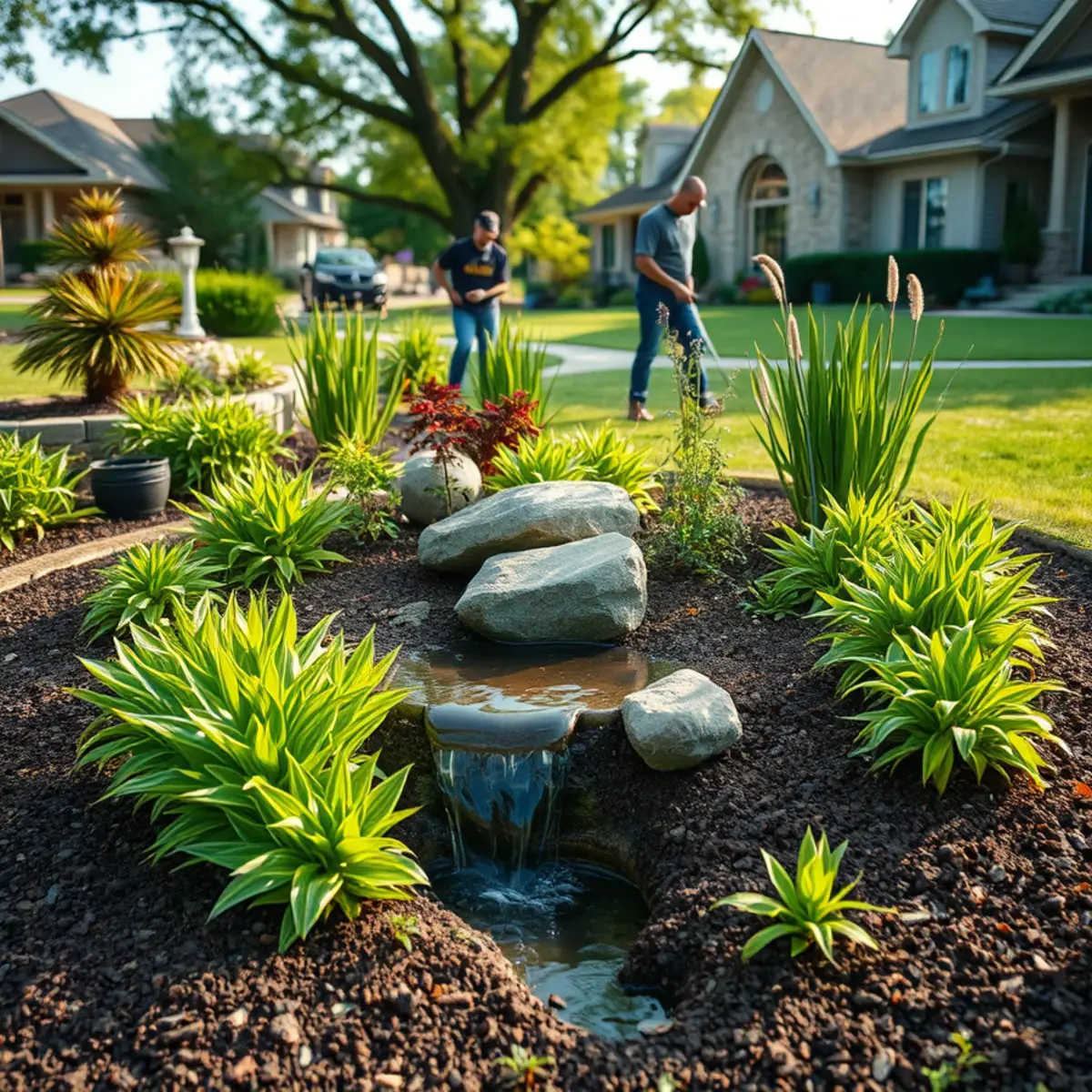
A rain garden intercepts water that would otherwise run across your yard or off your roof, holds it briefly in a shallow depression, and lets it filter down into the soil. The deep roots of the plants open channels in the ground, and the basin gives water time to soak in rather than sheet away.
The payoff is less standing water, less runoff carrying pollutants to the storm system, and a recharged water table instead of an overloaded gutter. It is a rare fix that is both practical and pretty, which is why we fold rain gardens into drainage solutions whenever a site suits one.
Siting: Where It Goes Matters Most
Placement makes or breaks a rain garden. Get it wrong and you can channel water toward the house — the exact opposite of the goal.
- Keep it at least 10 feet from your foundation so infiltrating water never threatens the basement.
- Choose a natural low spot where water already wants to collect, or a place a downspout or sump line can be routed to.
- Avoid siting it directly over a septic system or utility lines.
- Pick a spot that drains — if water already stands there for days, that ground may be too saturated and needs a different fix first.
- Full or part sun suits the widest range of rain-garden plants.
Sizing and Digging in Clay
Size follows how much water you are catching and how fast your soil drains. A rain garden fed by a large roof needs more capacity than one catching a small slope. As a rough rule, the harder your soil drains, the larger and shallower the garden should be to give water the time and surface area to soak in.
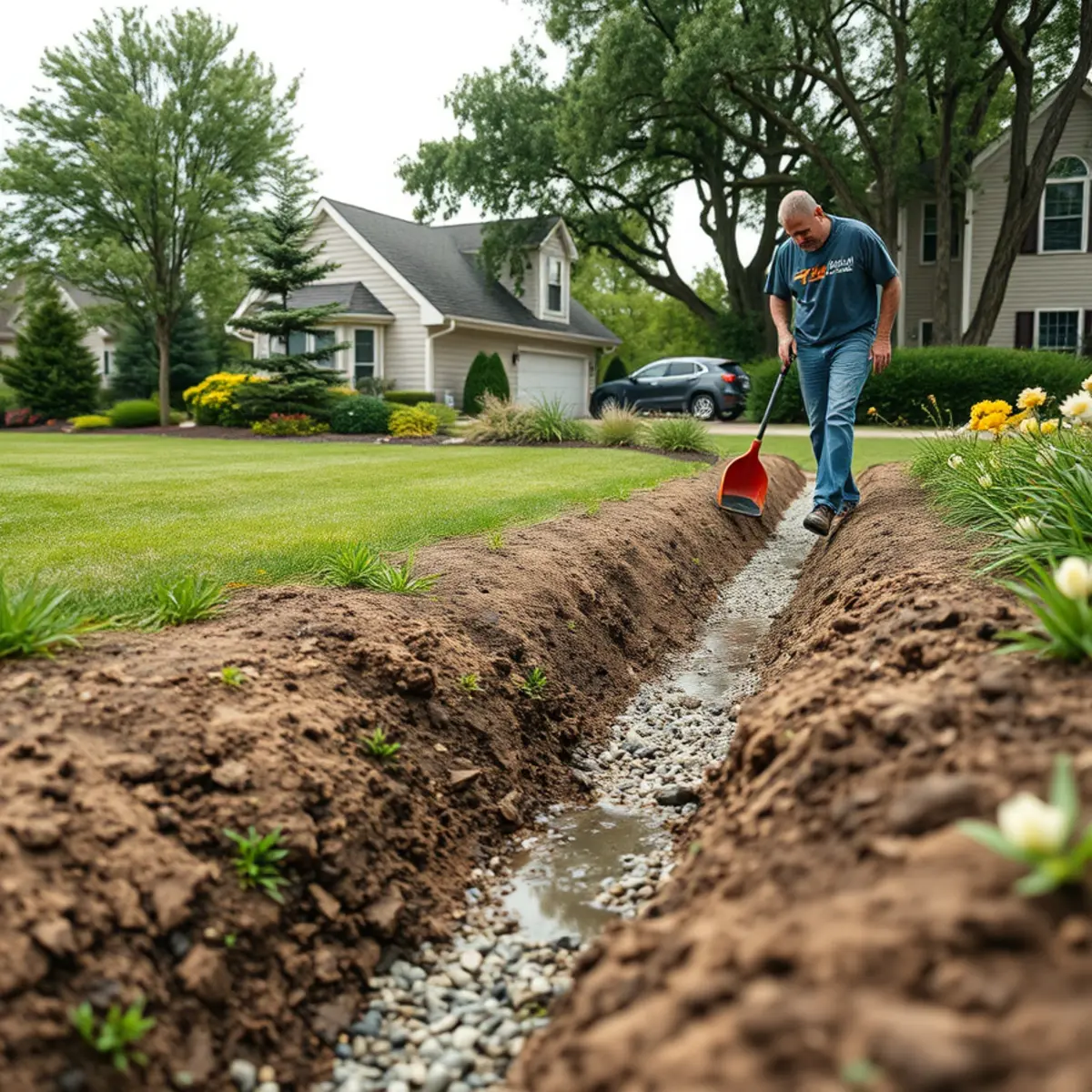
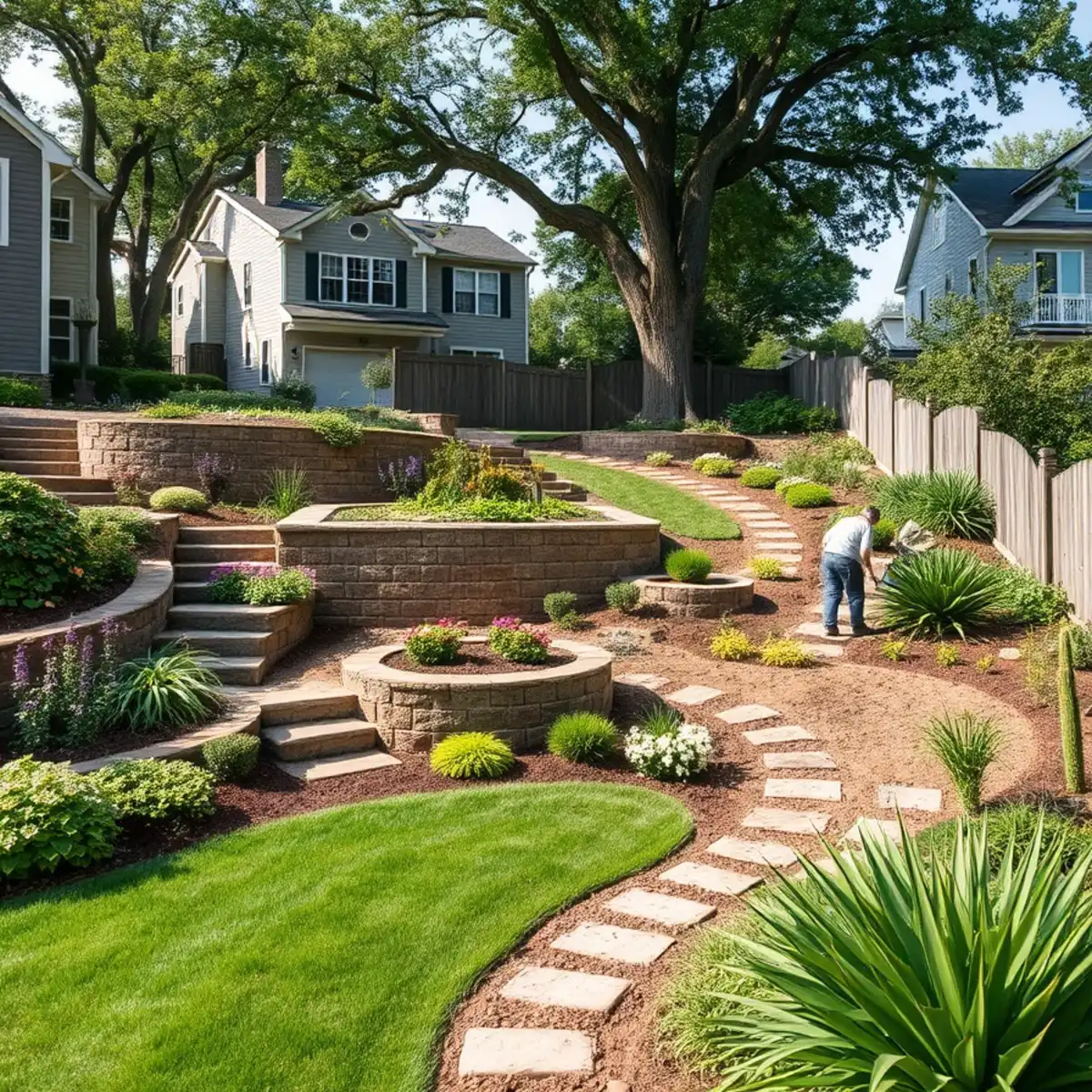
Our clay is the wrinkle. Run a percolation test first — dig a hole, fill it, and time how long it takes to drain — to see what you are working with. Heavy clay often drains too slowly on its own, so we amend the basin with compost and coarse sand to speed infiltration, and shape the depth so water clears within a day or two rather than lingering. Get this part right and the garden works; skip it and you have built a puddle. Matching the basin to the site is exactly the kind of judgment a full landscape design accounts for.
Planting in Zones
A rain garden has a wet middle and drier edges, so it is planted in zones. The center floods after a storm and dries between, so it needs the toughest, most flood-tolerant plants. The sloped sides sit in between, and the rim stays driest.
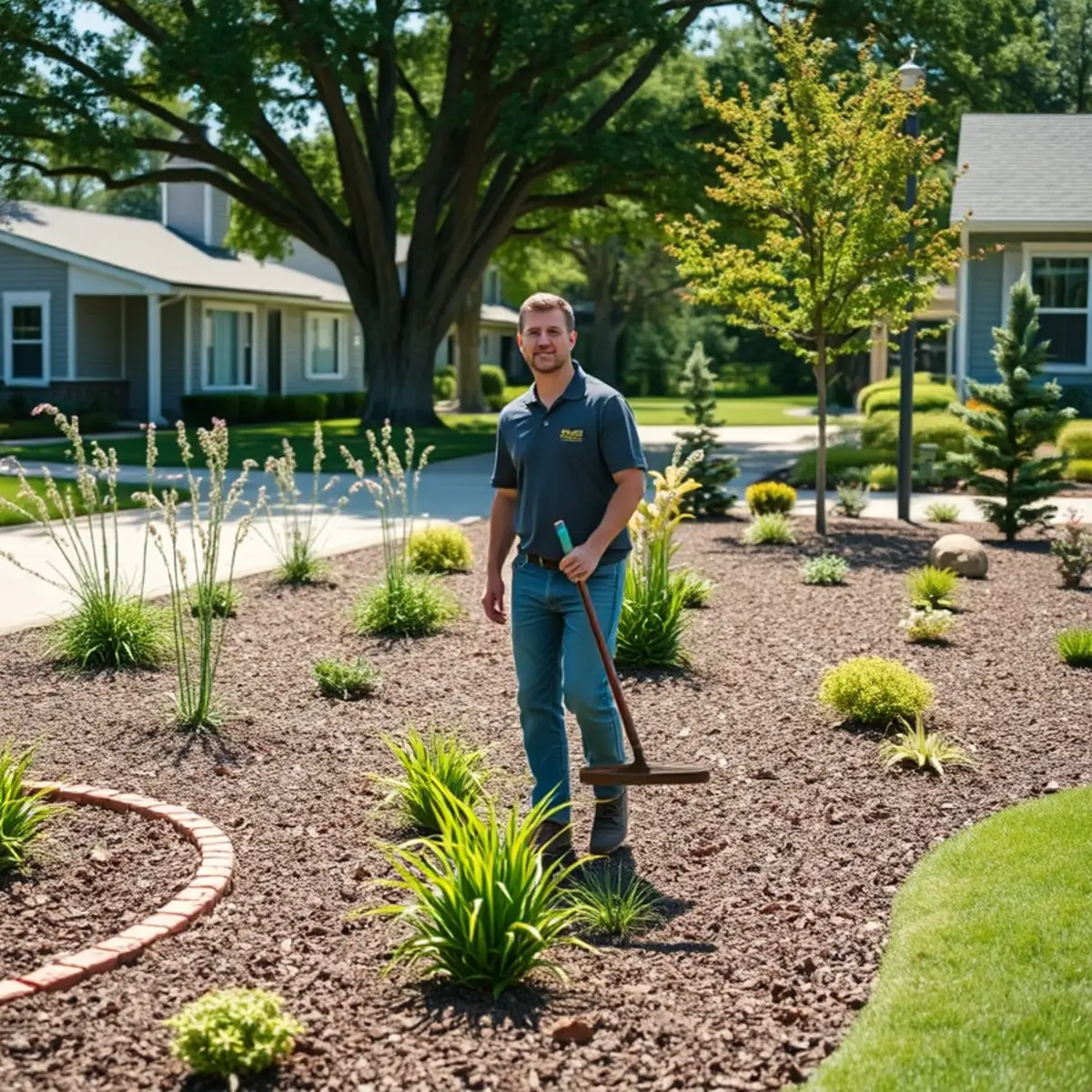
Deep-rooted Wisconsin natives are ideal because they handle that swing from soaked to dry and their roots drive infiltration. Blue flag iris, swamp milkweed, and cardinal flower take the wet center; switchgrass and little bluestem hold the slopes; coneflower and black-eyed Susan finish the drier rim. This is a showcase for native planting and softscaping, and it turns a drainage headache into a pollinator magnet.
How It Handles Snowmelt and Clay
Our toughest test for any drainage feature is spring snowmelt, when weeks of accumulated snow release faster than clay can absorb. A properly sized and amended rain garden meets that surge by spreading the water over a wide, shallow area and holding it while it filters down, rather than letting it rush across the yard toward the house.
It is not magic — in an extreme melt a rain garden may fill and drain more slowly. But paired with the right inputs, like extended downspouts feeding into it, it takes a serious bite out of the standing water Fox Cities homeowners fight every March. Clients in Appleton and Menasha use rain gardens as one part of a whole-yard drainage plan, and the wet corner that used to sit useless becomes the best-looking spot in the yard.
Want a hand with your project?
The owner offers free, no-obligation estimates across Appleton and the Fox Cities.
Frequently Asked Questions
No — it's the opposite. A pond holds water permanently; a rain garden is a shallow, planted basin designed to drain within a day or two after a storm. It captures runoff, lets it soak into the ground, and stays dry between rains. It won't breed mosquitoes if it drains as designed.
Yes, with preparation. Clay drains slowly, so we run a percolation test and amend the basin with compost and coarse sand to speed infiltration, then size and shape it to clear within a day or two. Skipping that step leaves you with a puddle rather than a working rain garden.
At least 10 feet from the foundation. That distance ensures water soaking into the garden never migrates toward your basement. Also keep it clear of septic systems and utility lines, and place it in a natural low spot or somewhere a downspout can be routed to feed it.
It handles a lot of it. A properly sized, amended rain garden spreads the melt over a wide, shallow area and holds it while it filters down, cutting the standing water that plagues clay yards in March. In an extreme melt it may fill and drain slowly, so it often works best as part of a broader drainage plan.
Related Services & Areas

Written by the team at Down To Earth Landscaping, an owner-operated landscaping company serving Appleton and the Fox Cities for over 20 years. We design, build, and maintain outdoor spaces built for Wisconsin's climate.