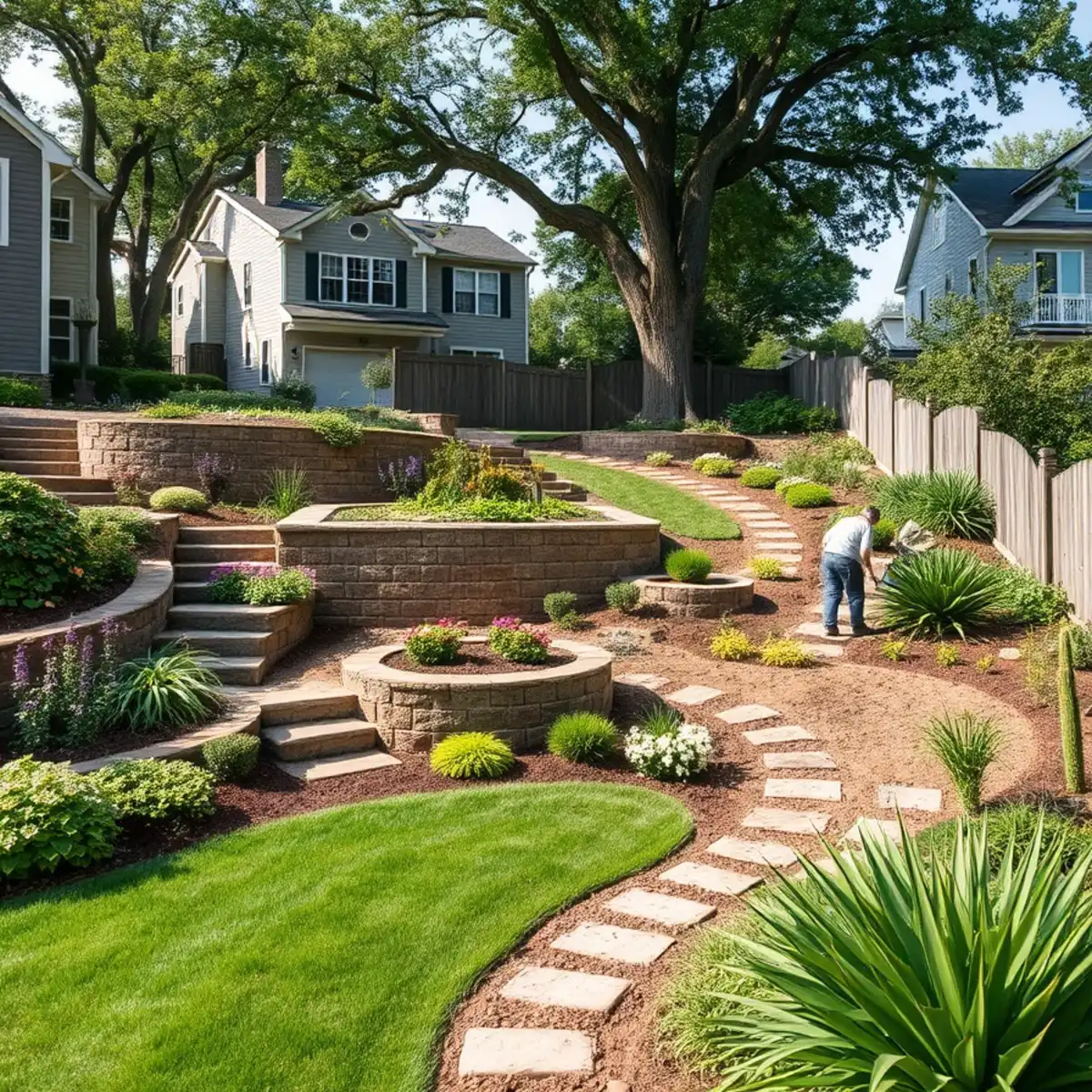
A retaining wall looks simple — a tidy stack of block or stone holding back a slope. What it is actually doing is resisting tons of soil pressure, made worse every winter by frost and water. Get the hidden parts right and a wall lasts decades. Get them wrong and it bulges, leans, and fails.
Homeowners usually start by asking which material to use. It is a fair question, and the answer affects both cost and look. But the material is only part of the story. What goes behind the wall — the drainage, the base, and how deep the footing sits — matters just as much for whether it survives a Wisconsin winter.
We build walls across Appleton and the Fox Valley, from garden borders to serious grade changes. Here is how the common materials compare, and the factors that move a project's cost and lifespan.
Key Takeaways
- The wall material sets the look and part of the cost; drainage and base set the lifespan.
- SRW block, natural stone, boulder, and timber each trade off cost, longevity, and appearance.
- Freeze-thaw is the real test here — gravel backfill, a drain pipe, and a footing below the frost line are what beat it.
- Walls over about four feet usually need engineering, which changes both scope and cost.
What a Retaining Wall Is Actually Fighting
Three forces work against every wall: the weight of the soil behind it, water building up in that soil, and frost. In our climate the last two gang up. Water trapped behind a wall freezes, expands, and shoves the wall forward — the same freeze-thaw cycle that heaves patios and sidewalks.
That is why a well-built wall is mostly things you never see: a compacted base, gravel backfill, a drain to carry water away, and sometimes geogrid (a synthetic mesh that ties the wall back into the hillside). Skip these and even the priciest stone will fail. Our retaining wall builds start with these fundamentals regardless of the facing material.
Comparing the Main Materials
Each material has a place. The right pick depends on wall height, look, budget, and how much grade you are holding back.
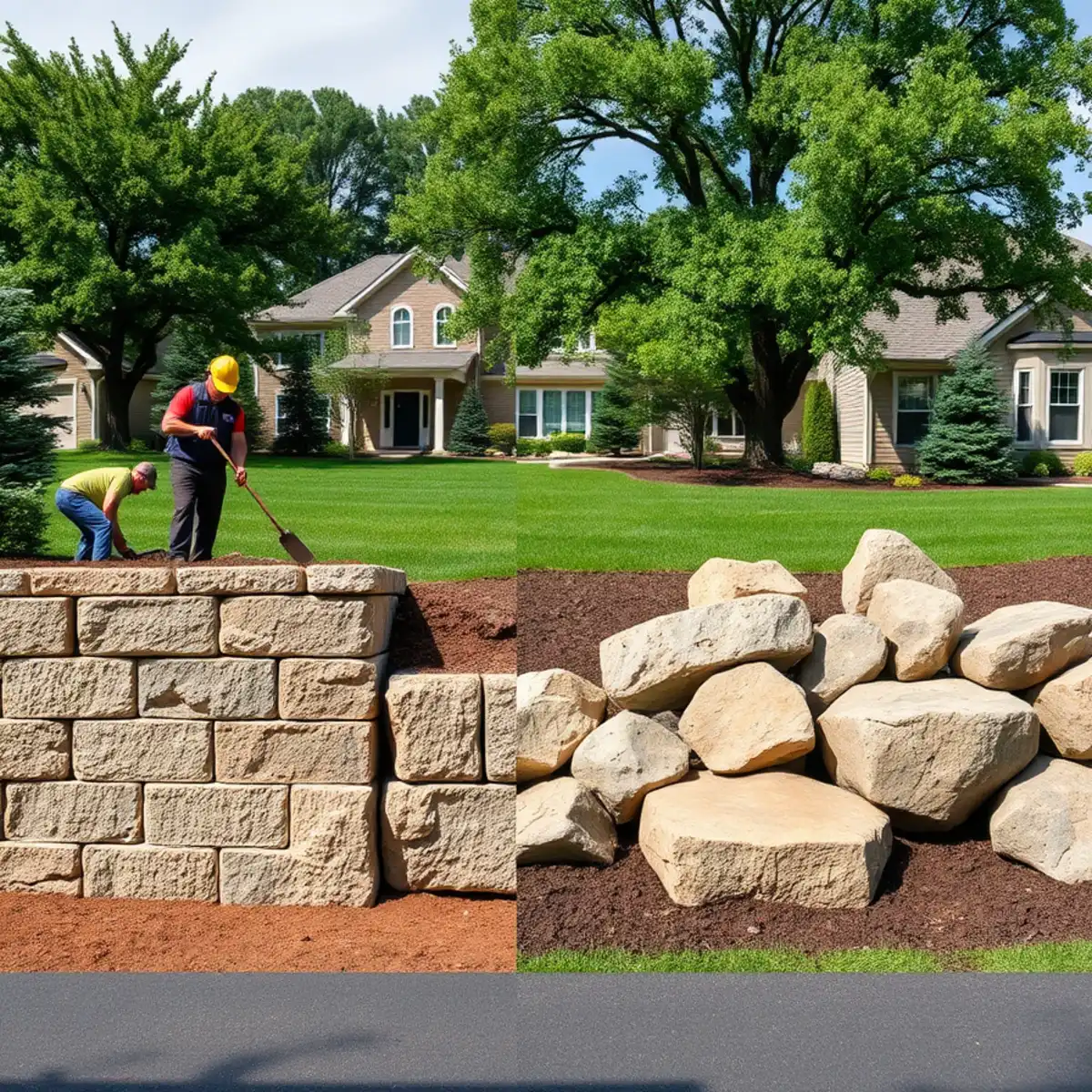
- Segmental retaining wall (SRW) block: Engineered concrete units built to interlock and batter (lean back) into the slope. Consistent, cost-effective, and strong for taller walls. The most common choice for a reason — predictable and durable.
- Natural stone: Quarried or fieldstone, either dry-stacked or mortared. The most timeless look and very long-lasting, but material and skilled labor push it to the higher end.
- Boulder (armor stone): Large stones set by machine. Great for a rugged, naturalistic grade change and excellent drainage between stones. Cost hinges on stone size and access for equipment.
- Timber: Pressure-treated wood, the lowest upfront cost. But it is the shortest-lived here — wood eventually rots in our wet clay and freeze-thaw, so plan on replacement down the road.
Drainage Behind the Wall Decides Everything
If we could underline one thing, it is this: the drainage behind a wall matters more than the face of it. A wall with no way to shed water becomes a dam. Pressure builds, frost multiplies it, and the wall gives.
Proper construction packs free-draining gravel behind the wall and runs a perforated drain pipe along the base to carry water to an outlet. On taller walls we add geogrid at intervals to anchor the structure deep into the retained soil. These steps do not show in a photo, but they are the reason a wall stands straight after fifteen winters. They also tie naturally into a yard's broader drainage plan, since a slope you are retaining is often a slope that sheds water.
The Base and the Frost Line
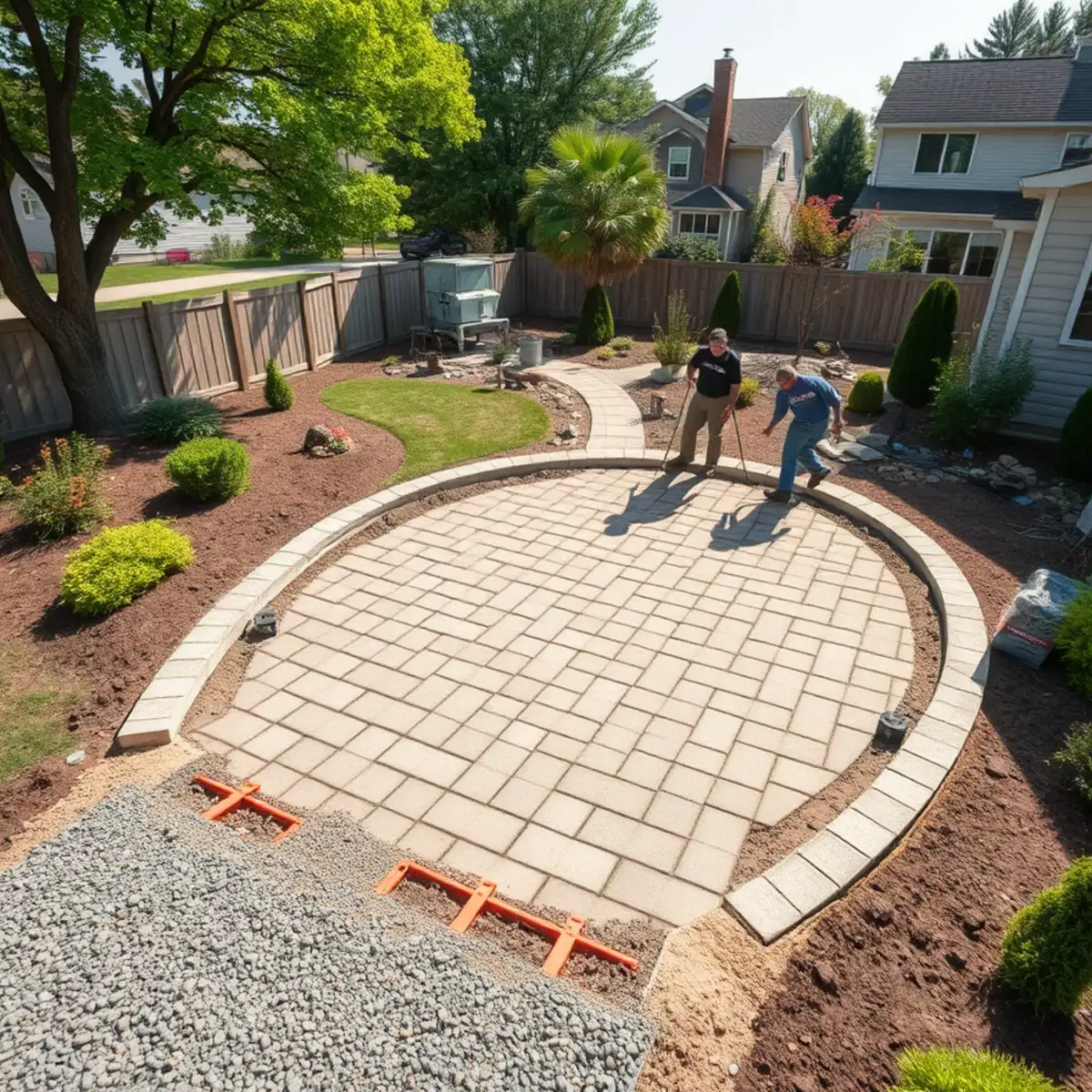
Under the first course of block sits a compacted gravel base, leveled with care — the whole wall follows this first course, so precision here pays off for its entire life.
For walls and any footing that must not move, depth matters. Wisconsin's frost line runs deep, commonly around four feet, and anything shallow-set is subject to frost heave. Freestanding pillars, steps, and taller structural walls need footings that reach below that frost depth so winter cannot lift them. This is one of the clearest differences between a wall built to last and a stack that shifts after a season or two.
What Moves the Cost
Cost follows the work, not just the wall's length. We put it all in a written, line-item proposal so you can see where the budget goes.
- Height: Taller walls hold back far more soil and often cross the threshold — typically around four feet — where engineering and permits are required.
- Length and curves: More linear feet and more curves mean more material, cuts, and labor.
- Material: Timber, SRW block, boulder, and natural stone climb in that rough order for most projects.
- Drainage and base: Deeper excavation, more gravel, drain pipe, and geogrid add cost — and add years.
- Access: Whether a machine can reach the work, or everything is moved by hand, can swing labor significantly.
Want a hand with your project?
The owner offers free, no-obligation estimates across Appleton and the Fox Cities.
Frequently Asked Questions
Natural stone and quality SRW block, when built with proper drainage and a base below the frost line, last the longest here — often decades. Timber is the shortest-lived because wood eventually rots in our wet clay and freeze-thaw cycles. Boulder walls are also very durable when set well.
Yes, on nearly every wall. Water trapped behind a wall builds pressure and, once it freezes, pushes the wall forward. Gravel backfill and a drain pipe to an outlet let that water escape. It is the single most important factor in whether a wall survives our winters.
As a general rule, walls taller than about four feet require engineered design and often a permit, because the soil loads become significant. It also depends on the slope and what sits above the wall. We flag this during the estimate so the design and budget account for it upfront.
It depends on stone size and site access. Boulder walls can be economical for rugged, naturalistic grade changes and drain well on their own, but large stones need machine access. On a tight lot where equipment can't reach, hand-set block may be more practical. An on-site estimate is the honest way to compare.
Related Services & Areas

Written by the team at Down To Earth Landscaping, an owner-operated landscaping company serving Appleton and the Fox Cities for over 20 years. We design, build, and maintain outdoor spaces built for Wisconsin's climate.