After a Fox Cities winter, the first warm weekend makes everyone want to attack the yard. Hold that thought for a second. Timing your spring cleanup is as important as doing it, and jumping in too early can do more harm than good.
A good cleanup clears winter's mess, wakes up the lawn and beds, and sets the stage for everything that grows this year. Done in the right order, it takes one solid effort. Done piecemeal, or too soon, and you compact wet soil, tear up the lawn, and disturb pollinators before they have emerged.
Here is the checklist we work through for Appleton clients, plus the timing cues that tell you the yard is actually ready — and the few jobs worth waiting on.
Key Takeaways
- Wait until the ground has dried and firmed up — working wet clay compacts it and damages the lawn.
- Work top-down and outside-in: debris first, then beds, then lawn, then mulch and edging.
- Hold off cutting back some perennials and removing all mulch until nights warm, to protect overwintering pollinators.
- In our area, the real start is usually once snowmelt has drained and soil is no longer soggy.
First, Wait for the Ground to Dry
The single most common spring mistake is starting on soggy ground. Our clay soil holds snowmelt for weeks, and walking or raking on saturated clay squeezes the air out of it — compaction that lingers all season and chokes roots.
The test is simple: grab a handful of soil and squeeze. If it forms a wet, sticky ball, it is too early. If it crumbles apart, you are good to go. In the Fox Cities that readiness usually arrives once the last snow has melted off and drained, not the first warm day. Patience here protects the lawn you are about to clean up.
The Cleanup Checklist, In Order
Work through it top-down and outside-in
Doing these in sequence saves you from redoing work — no raking a bed twice because you knocked debris into it later.
- Pick up branches, downed limbs, and any debris the snow left behind.
- Cut back last year's ornamental grasses and spent perennial stems (see the timing note below).
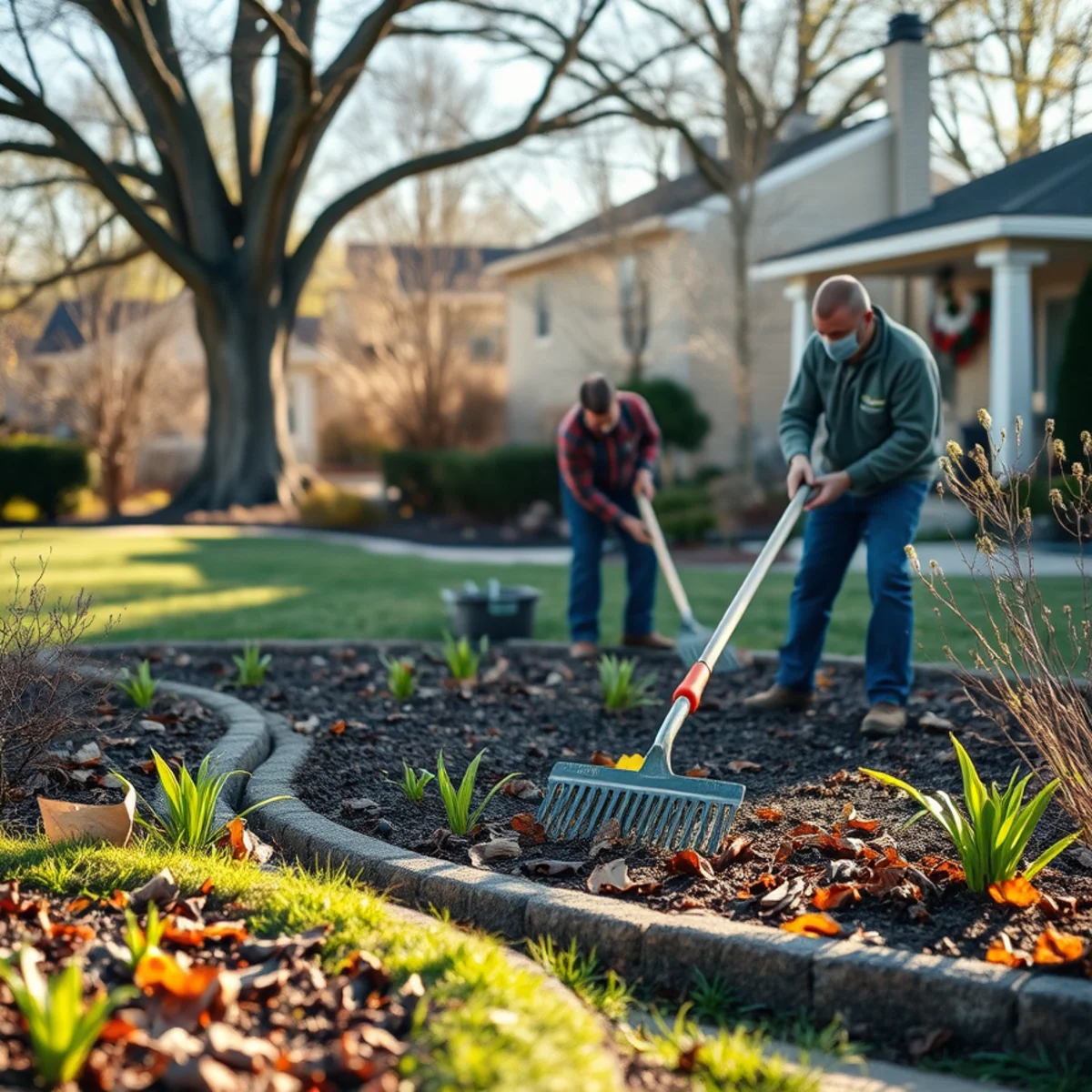
- Gently rake matted leaves and dead thatch out of beds and off the lawn.
- Inspect trees and shrubs for winter damage and prune broken or dead wood.
- Refresh bed edges with a clean, sharp cut line between lawn and mulch.
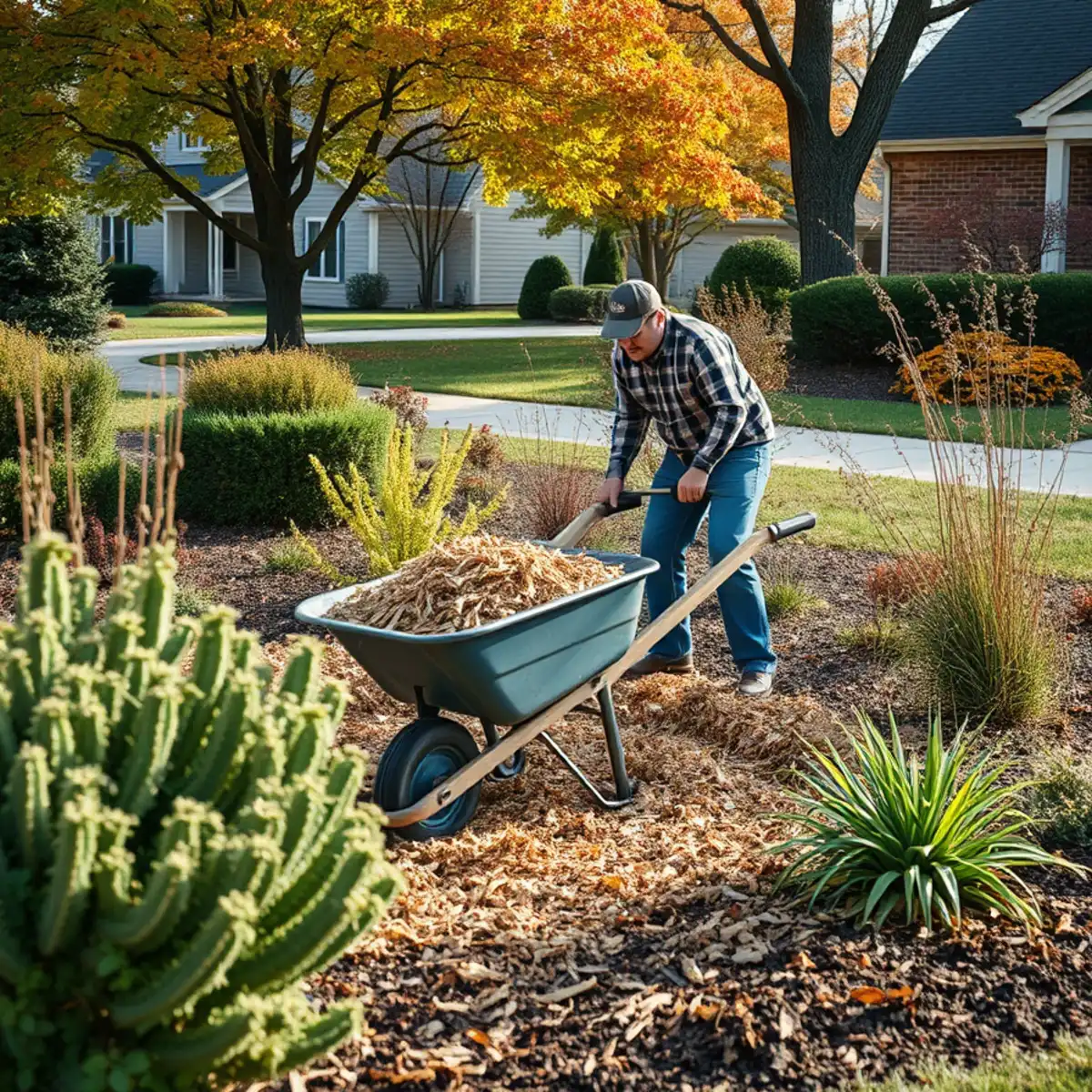
- Top up mulch to about 3 inches once the soil has warmed.
- Give the lawn its first light mow and address any bare or salt-damaged spots along walks and drives.
What Not to Do Too Early
Some spring jobs reward waiting. Rushing them undoes the benefit.
Leave a portion of last year's perennial stems and leaf litter until nights are consistently in the 50s. Native bees and beneficial insects overwinter in hollow stems and under leaves; clearing everything on the first warm day evicts the pollinators your garden needs. Cut in stages as the weather settles.
Do not pull back all the mulch to speed up the soil either. That mulch is still buffering roots against our late frosts, which linger until mid-May. And never work beds while they are muddy. If you want the beds handled at the right moment without the guesswork, our seasonal cleanup crews time it to the yard, not the calendar.
Waking Up the Lawn
The lawn wants a gentle touch in spring. A light raking lifts matted thatch and lets air reach the crowns, but aggressive dethatching on soft spring ground can tear healthy grass out by the roots. Save heavy renovation for later.
Watch the edges along driveways and sidewalks, where winter's de-icing salt burns the turf. Those strips often need overseeding once soil temperatures climb. Core aeration, overseeding, and fertilizing are better matched to timing than to eagerness, which is why they fold neatly into a season-long lawn care and maintenance plan rather than a single frantic weekend.
Beds, Mulch, and When to Call for Help
Once beds are cleared and edged, fresh mulch is the finishing move — but timing counts here too. Mulch laid on cold, wet soil keeps it cold and wet. Wait until the ground has warmed, then lay about 3 inches of shredded hardwood, kept back from stems and trunks. That layer holds moisture through summer and smothers weeds before they start.
Spring cleanup is doable for many homeowners, but it lands during a narrow, busy window, and a large or long-neglected yard can be a lot. Plenty of clients across Appleton and Grand Chute have us handle the heavy first pass so the season starts clean, then take it from there themselves. Either way, the goal is the same: work with the yard's timing, and it rewards you all summer.
Want a hand with your project?
The owner offers free, no-obligation estimates across Appleton and the Fox Cities.
Frequently Asked Questions
Once the snow has fully melted and the ground has drained enough that soil crumbles rather than forming a wet ball when squeezed. In the Fox Cities that is usually well into spring, not the first warm day. Working saturated clay compacts it and damages the lawn.
It can be. Native bees and beneficial insects overwinter in hollow stems and leaf litter. Cutting everything on the first warm day removes that habitat. Leave a portion standing until nights are consistently in the 50s, then clear in stages as spring settles in.
Don't strip it all off early. Winter mulch is still protecting roots from late frosts that linger until around mid-May. Once the soil warms, refresh the layer to about 3 inches rather than removing and replacing everything. Keep it pulled back from stems and trunks.
Those burned strips usually need raking out and overseeding once the soil warms enough for germination. Watering helps flush lingering salt from the root zone. It is a common spring repair here; timing the overseeding to soil temperature matters more than doing it on the first warm weekend.
Related Services & Areas
Services
Service Areas

Written by the team at Down To Earth Landscaping, an owner-operated landscaping company serving Appleton and the Fox Cities for over 20 years. We design, build, and maintain outdoor spaces built for Wisconsin's climate.